Visit
Visit Sant Cugat
The monastery and its Romanesque cloister in the centre, the Celler Modernista, the museums and, on the edge of town, the hermitages and springs of Collserola.
Must-sees
Pl. d’Octavià, s/n
Royal Monastery of Sant Cugat: the church
Benedictine monastery founded in the 9th century on the site of a former Roman fort. It combines Romanesque, Gothic and Renaissance architecture. Its church has been the parish church of Sant Pere d’Octavià since the 19th century.
Opening times: Church: daily 8:00–13:00 and 17:00–20:45 (may vary with parish needs). Tower viewpoint: second Saturday of each month.
Price: Free entry
Pl. de l’Om, 1
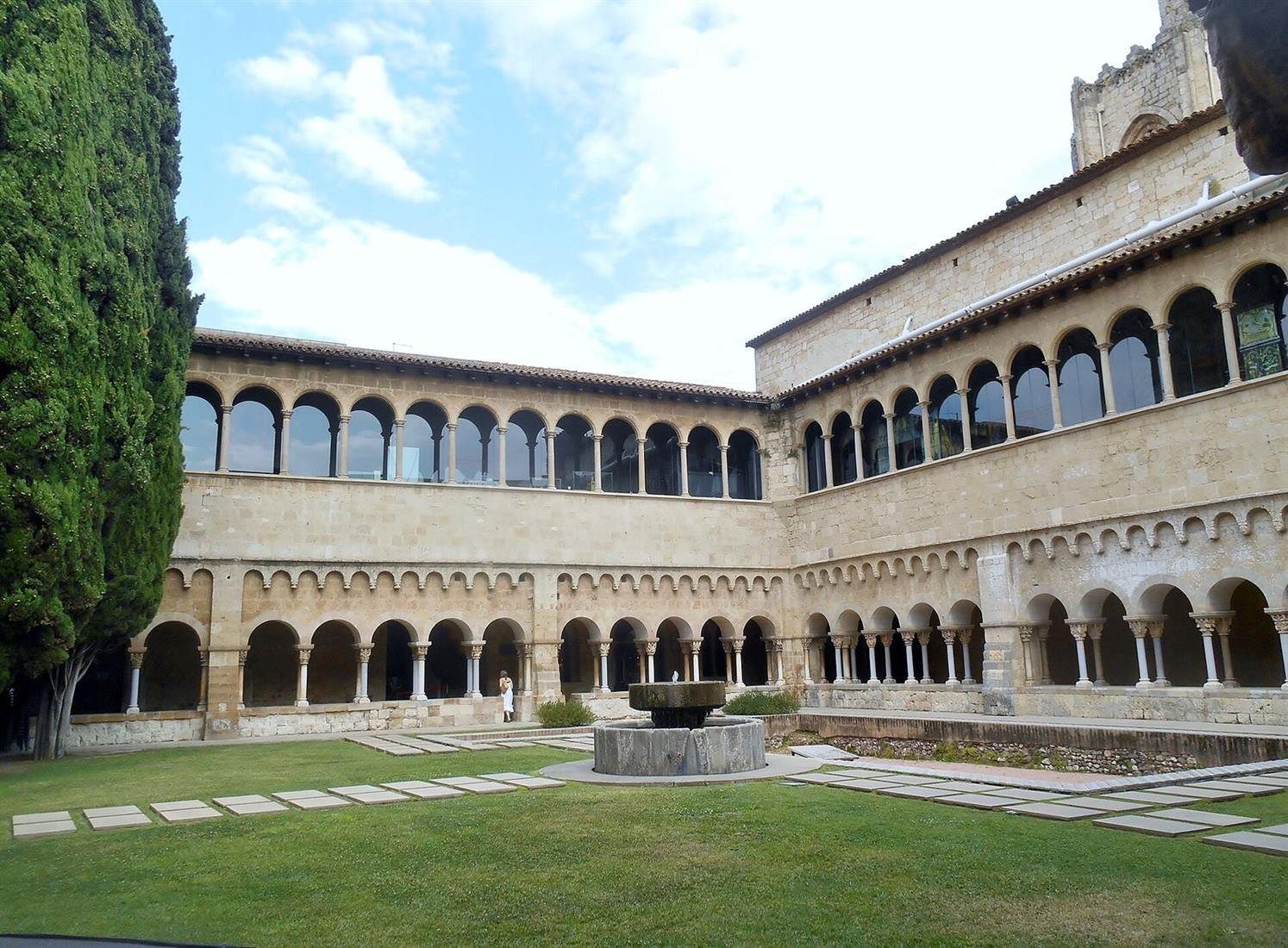
Romanesque cloister and Monastery Museum
Romanesque cloister built from around 1190 under Arnau Cadell, with 144 carved capitals. Since 2003 it has housed the museum, whose permanent exhibition covers the monastery’s architecture and the daily life of the Benedictine community.
Opening times: 1 October to 31 May: Tuesday to Saturday 10:30–13:30 and 16:00–19:00; Sundays and public holidays 10:30–14:30. 1 June to 30 September: Tuesday to Saturday 10:30–13:30 and 17:00–20:00; Sundays and public holidays 10:30–14:30. Closed on Mondays that are not public holidays, 25 and 26 December and 1 and 6 January.
Price: Free entry (guided tours and audio guide charged separately)
Pl. d’Octavià, 10
Plaça d’Octavià and the tourist office
The square in front of the monastery, at the heart of the old town. In the 18th century Abbot Gaiolà had water piped here from the monastery fountain to supply the town. The tourist office is on the square: tel. 936 759 952, turisme@santcugat.cat.
Pl. de la Cooperativa, s/n
Celler Modernista (cooperative winery)
Modernista cooperative winery designed by Cèsar Martinell for the Sindicat Vitivinícola de Sant Medir, founded in 1921 by 51 local winegrowers. Only about two-thirds of the design was built; the tower dome was completed in 2020. It is now one of the Museus de Sant Cugat sites.
Opening times: Sundays and public holidays 10:30–14:30. Free guided tour on the third Sunday of each month (booking recommended). No visits in August.
Av. de Rius i Taulet, s/n
Sant Domènec chapel
Small chapel built around 1700 at the junction of the old roads to Terrassa, Rubí and Sant Andreu de la Barca. The Battle of Sant Cugat began around it on 12 October 1808. Restored in 2007, it is a Museus de Sant Cugat site.
Opening times: Open day on the first Sunday of each month (except August), 11:00–13:00.
Price: Free entry
Camí de la Torre Negra, s/n
Torre Negra (closed)
Fortified house with a square plan and a tower on its south-east corner, built for the monastery in 1145. The interior follows the Catalan civil Gothic style around a central courtyard. It is owned by the town council and is one of the main gateways to Collserola.
Opening times: Currently closed to the public because of the African swine fever crisis. When open: exterior on the second Sunday of each month, 10:00–14:00, with guided tours every 30 minutes from 10:30 to 13:00; closed in August.
C. de la Mina, s/n
Can Vernet aqueduct
14th-century Gothic aqueduct that carried water from the monks’ mine to the cistern next to the Abbot’s Palace and to the town. It stands inside the park of the same name.
Av. de Gràcia, 30
Casa Armet
Modernista building regarded as the most significant in the town, with an asymmetric composition and elaborate detailing. It is privately owned and can only be seen from outside.
Museums, art and strolls
Pl. de Can Quitèria, 1
Grau-Garriga Contemporary Textile Art Centre
Contemporary textile art centre at Can Quitèria, showing work by Josep Grau-Garriga and part of the municipal contemporary tapestry collections. It runs temporary exhibitions, a tapestry workshop and residencies at Casa Aymat.
Opening times: Tuesday to Friday 17:00–21:00; Saturdays 10:00–14:00 and 17:00–20:00; Sundays and public holidays 10:00–14:00. Closed on Mondays, 1 and 6 January, 24 June, 25 and 26 December and in August.
C. de Villà, 58
Casa Aymat
Noucentista building from 1926 designed by Ramon Raventós as a house and workshop, later linked to the Aymat tapestry works. Since 2019 it has been a space for artistic creation and residencies; it turns a hundred in 2026.
Pl. de Pep Ventura, 1
Museum of Comics and Illustration
Privately run museum of comics and illustration, opened in 2019. It traces the history of comics through titles published between 1865 and 2000, with a focus on original artwork.
Opening times: Tuesday to Friday 16:00–20:00; Saturdays 10:00–14:00 and 16:00–20:00; Sundays 10:00–14:00. Closed on Mondays. Website: museudelcomic.org.
C. de Santiago Rusiñol, 60
Cal Gerrer House Museum
Pre-modernista house, formerly the Arpí ceramics works and now home to the Fundació Cabanas. It displays personal belongings of Marilyn Monroe, with further floors on the Cabanas Alibau family’s art and Arpí ceramics.
Opening times: October–April: Tuesday to Friday 10:30–14:00 and 17:00–20:00; Saturdays and public holidays 10:30–14:30 and 17:00–20:00; Sundays 10:30–14:30. May–September: Tuesday to Friday 10:30–14:00 and 17:00–20:00; Saturdays and public holidays 10:30–15:00 and 17:00–20:30; Sundays 10:30–15:00.
Pl. de Victòria dels Àngels, 1
Teatre-Auditori Emma Vilarasau
Municipal performing arts venue with a programme of theatre, dance, music, opera, circus, poetry and magic. Tel. 935 907 690; website: tasantcugat.cat.
Av. de Rius i Taulet, 120
Mercantic
Permanent antiques market covering more than 15,000 m², with over a hundred traders, restaurants and events. On the first Sunday morning of each month it hosts La Descarregada, a second-hand market.
Opening times: Nau Central: Tuesday to Friday 10:00–19:00; Saturdays and Sundays 10:00–15:00. Outdoor stalls: Saturdays and Sundays 10:00–15:00.
Price: Free from Tuesday to Saturday; on Sundays €2 between 11:00 and 14:00 (free at other times and for under-12s).
C. de Ramon Llull, 18
Parc Central
Terraced urban park around the former Bomba stream, with a footpath and cycle path along the stream. It has children’s play areas, sports courts, a picnic area and a dog area.
Opening times: Always open.
Collserola: access restricted
Because of African swine fever, the Generalitat has restricted leisure activities in the Collserola Natural Park: walking and cycling on dirt tracks are not allowed. On 9 September 2026 it announced that the restrictions would stay in place for at least three more months. The Torre Negra is closed to the public. Check the current situation before you go.
In Collserola
Hermitages, springs and farmhouses in the natural park, in the south of the municipality.
Camí de Sant Medir, s/n
Sant Medir hermitage
Hermitage of Romanesque origin, heavily remodelled in the 15th century, set in woodland in the Gausac valley in Collserola, next to the former Can Gener farmhouse. The Aplec de Sant Medir gathering is held here every 3 March.
Vallvidrera–Sant Cugat road, km 4.7
Sant Adjutori hermitage
Hermitage with a circular floor plan dating from the 10th century, with later alterations and extensions, within Collserola in Sant Cugat’s municipal area.
Collserola Natural Park
Can Borrell reservoir
Small reservoir built in the early 20th century in Collserola, reached by an easy walk. The steps down to the reservoir are closed.
Camí de la Font Groga, s/n
Font Groga
Spring set in damp holm oak and oak woodland. The area is a partial nature reserve with special protection for its ecological value.
Av. de Can Montmany, s/n · Valldoreix
Can Montmany
Farmhouse at the foot of the Puig Madrona natural area. Its central clock tower, chapel and turrets date from the late 19th century, before the phylloxera plague.
Planning your visit
The Museu de Sant Cugat has four sites: the monastery, the Celler Modernista, the Torre Negra and the Sant Domènec chapel. Entry to the monastery cloister and church is free.
The tourist office is at Pl. d’Octavià, 10 (tel. 936 759 952, turisme@santcugat.cat). Opening times change with the season and public holidays, so check the museum website before you go.
Official information
This is an independent community website. For opening times, bookings and official information, always check the official sources.